Static It Looks but Dynamic It Is
Exercises are known to be involving continuous physical movements of the various parts of the human body. However, in the case of Yogasanas (Yoga exercises), it involves the static or stationary holding of the body in a particular posture for a prescribed period of time (as shown below). Although going into the pose and coming out of it involves some amount of movements, this alone does not constitute the Yogasana. It is the static holding of the body in a specific position for a long time that makes it a Yoga exercise.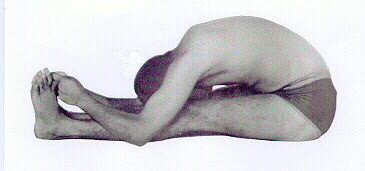
Can such a static posture (asana) be considered an exercise? YES - because it produces dynamic results. There are also static positions such as being seated or sleeping in which humans are engaged daily, but these do not produce any dynamic results. Therein lies a world of difference between ordinary static positions and Yogasanas.
What kind of dynamic results do Yogasanas produce? They are able to prevent and cure diseases and also vivify and reinvigorate every organ, every tissue and every cell in the human body.
How is it that such static poses are able to produce dynamic results? The secret lies in the working of the pranic (cosmic) energy. Ordinarily, the pranic energy (life-force) keeps moving throughout the human body. When an asana is done, the energy is not allowed to move and is held or locked-up in a particular part or organ of the body for which the asana is intended, enabling the energy to work on that part. Thus, it produces magnificent and incalculable results. The longer the asana (pose) is held, the better the results are.
Therefore, practise Yoga and feel the miraculous working of the cosmic energy.